

Porcelain surfaces are rapidly gaining popularity among interior designers, custom home builders, and kitchen remodelers across North America. While engineered quartz and natural granite have dominated residential surfaces for decades, advanced sintered compact slabs offer a compelling alternative. Homeowners evaluating modern surface materials often weigh porcelain countertops pros and cons to determine whether this material aligns with their daily cooking routines, aesthetic preferences, and renovation budgets.
Selecting the right surface involves understanding technical performance, fabrication challenges, long term maintenance, and lifecycle value. This guide examines how porcelain performs in demanding kitchen environments.
What are porcelain countertops?
Porcelain slabs are engineered surfacing materials produced from refined raw natural components. The composition consists primarily of kaolinite clay, feldspar, quartz, silica, and natural mineral oxide pigments. Manufacturers blend these raw minerals with water into a fine slurry, compact the mixture under hydraulic presses at pressures exceeding 400 bar, and fire the dry slabs in specialized kilns at temperatures ranging between 2200°F and 2500°F (1200°C to 1370°C).
This high heat vitrification process fuses mineral particles together at a molecular level, eliminating micro voids and air pockets. The resulting slab is an ultra dense, completely non porous material that differs fundamentally from traditional ceramic tile. Standard ceramic tiles utilize lower quality clays, lower firing temperatures, and softer glazes, which leave them vulnerable to moisture intrusion and mechanical fracture.
Slabs designed for residential and commercial surfacing come in large format dimensions, often measuring 126″ by 63″ (320 cm by 160 cm). These dimensions allow fabricators to create continuous island tops with minimal seams. Slabs are manufactured in 3 primary standard thickness profiles:
- 6 mm (approx. ¼″): Used primarily for vertical wall cladding, backsplashes, cabinet drawer facings, and tile over tile retrofits.
- 12 mm (approx. ½″): The industry standard for residential countertops, typically built with mitered apron edges to replicate 2″ or 3″ thick stone slabs.
- 20 mm (approx. ¾″): Solid through body slabs that can feature traditional profile edges without requiring substrate underlayment.
High definition digital inkjet printing technology applies realistic marble, slate, wood, or concrete patterns onto the surface before the final firing stage. Because vitrification occurs throughout the entire body, porcelain produces a dense, inert slab with exceptional mechanical resilience.
Pros of porcelain countertops
Homeowners, architects, and culinary enthusiasts choose this material for its exceptional physical properties and versatile aesthetic range. The primary benefits of porcelain countertops include superior resistance to heat, moisture, stains, and environmental degradation.
Extreme Heat and Thermal Resistance
Unlike quartz surfaces that contain 7% to 10% polymer resin binders that scorch, melt, or discolor at temperatures above 300°F, porcelain contains zero synthetic resins. Because porcelain forms in kilns above 2200°F, hot pots, cast iron skillets, baking sheets, and boiling water directly off the stove will not burn, crack, or discolor the surface.
Superior Scratch and Abrasion Resistance
Porcelain scores between 7 and 8 on the Mohs mineral hardness scale, making it harder than granite (Mohs 6 to 7), marble (Mohs 3 to 4), and stainless steel (Mohs 5.5). You can prepare food and use carbon steel or stainless steel kitchen knives directly on the surface without leaving gouges, scratches, or dull abrasive marks.
Low Water Absorption and Stain Resistance
Porcelain features an absorption rate below 0.05%, which surpasses the standard 0.5% threshold set for impervious tiles. The vitrified structure prevents liquids from penetrating into the slab interior. Highly pigmented substances such as red wine, dark roasts, turmeric, tomato paste, soy sauce, and balsamic vinegar wipe away cleanly without leaving residual discoloration or permanent shadow rings.
Chemical and Acid Tolerance
Natural marble, limestone, and travertine react aggressively with acidic household items like lemon juice, citrus cleaners, and vinegars, resulting in chemical etching and dull surface marks. Porcelain is chemically inert and completely resistant to acids, alkalines, and industrial cleaners.
UV Resistance for Indoor and Outdoor Kitchens
Porcelain kitchen countertops colors derive from inorganic mineral pigments fused directly into the ceramic matrix during firing. Direct exposure to solar ultraviolet radiation will not fade, yellow, warp, or alter the color profile over time. This makes porcelain slabs 1 of the premier materials for outdoor BBQ stations, patio islands, and sunrooms.
Zero Sealing Required
Granite, marble, quartzite, and concrete surfaces require periodic application of penetrating sealers every 6 to 12 months to prevent moisture intrusion. Porcelain is inherently non porous from day 1, requiring zero chemical sealers, topical impregnators, or ongoing resealing schedules throughout its lifespan.
Lightweight Design Flexibility
With a density rating engineered into thin 6 mm and 12 mm profiles, porcelain exerts lower load pressure on cabinet carcasses, floor joists, and architectural foundations than 3 cm natural stone slabs. A 12 mm porcelain slab weighs roughly 6 lb per sq ft, whereas a 3 cm granite slab weighs 18 lb to 20 lb per sq ft.
Cons of porcelain countertops
Despite impressive technical strengths, porcelain presents specific limitations and installation complexities to consider before purchasing.
Edge and Corner Chipping Risks
While porcelain for countertops is exceptionally hard and scratch resistant, it is also brittle. Heavy direct impacts from hard objects, such as dropping a heavy cast iron pot or glass Dutch oven onto an unrounded 90 degree square edge, can cause sharp chips or fractures. Proper edge profiling, such as selecting an eased edge or pencil edge with a minimum 2 mm to 3 mm radius, helps distribute impact shock and reduce chipping potential.
Pattern Is Often Surface Deep
Most budget and mid tier porcelain slabs utilize high resolution inkjet printing to transfer patterns onto the top 1 mm layer of the slab. When fabricators profile or bevel an edge, the internal ceramic body is exposed, revealing a solid white, cream, or beige core that does not match the surface veining. While premium manufacturers now offer through body veining technology, these premium slabs command higher price tags.
Specialized and Costly Fabrication
Cutting porcelain requires specialized wet diamond bridge saws, CNC waterjet machines, and diamond core drills operating at high spindle speeds and slow feed rates. Standard stone fabrication tooling can cause micro stress fractures across the slab tension lines. Because the material requires delicate handling, fabrication and installation labor costs often exceed those of standard quartz or granite.
Limited Pool of Certified Fabricators
Because porcelain requires dedicated diamond tooling and specialized tension relief techniques, not every local stone fabrication shop accepts porcelain projects. Finding certified, experienced installers who understand proper substrate support, mitered apron fabrication, and epoxy color matching can take more time depending on your geographic location.
Difficult Onsite Repair
If a granite or quartz surface develops a chip, a skilled technician can fill the cavity with color matched polyester or UV cured acrylic resin and polish the area flush. Repairing chipped porcelain is significantly more complex, especially on printed glazed slabs where the surface pattern cannot be replicated with standard repair resins.
Are porcelain countertops durable?
A primary concern for kitchen planners is: are porcelain countertops durable enough to handle daily cooking and family use? The answer is unequivocally yes, provided the material is fabricated and supported correctly.
Durability in countertop surfaces is measured across 4 primary physical vectors:
- Surface hardness: Porcelain rates at 7 to 8 on the Mohs scale, outperforming natural granites and standard quartz composites. It resists abrasive wear from cookware, utensils, and cleaning pads.
- Thermal stability: Porcelain resists thermal shock and temperatures up to 2000°F, eliminating heat damage caused by hot cooking vessels.
- Flexural strength: High compaction yields a flexural strength exceeding 50 MPa (megapascals), enabling it to span reasonable unsupported gaps when bonded to rigid structural substrates.
- Chemical resistance: Total impermeability to oils, grease, household acids, and solvents protects the slab from structural breakdown or surface pitting.
The only physical vulnerability of porcelain lies in point load impact brittleness at unprotected perimeter corners. When installed over a flat, level, and rigid underlayment (such as 3/4 in exterior grade plywood or high density cement board) with full thin set mortar or structural adhesive coverage, porcelain provides decades of reliable, maintenance free service.
How to care for porcelain countertops
Caring for porcelain is straightforward because the non-porous surface prevents dirt, oils, and bacteria from penetrating below the glaze.
Follow these 5 daily and periodic care steps to keep your surfaces pristine:
- Daily wipe down: Clean the surface with warm tap water and a microfiber cloth or soft sponge for standard daily meal cleanup.
- Routine degreasing: Use a mild pH neutral dish detergent diluted in warm water to lift kitchen grease, oil splatters, and food residues.
- Deep residue removal: For dried, stubborn food residues, apply a non abrasive cream cleaner or a paste of baking soda and water. Let it sit for 5 minutes, then wipe clean with a damp microfiber towel.
- Scale and mineral deposit removal: If hard water leaves white calcium rings around faucet cutouts or undermount sink rims, apply diluted white vinegar or a mild descaling agent, rinse with clean water, and dry with a soft cloth.
- Edge protection: Avoid striking perimeter edges with heavy cast iron skillets, ceramic mixing bowls, or meat tenderizing mallets. Always use a cutting board near slab edges to safeguard corners from accidental blows.
Who should choose porcelain countertops?
Porcelain surfaces are not a universal solution for every renovation, but they provide extraordinary value for specific types of homeowners and architectural designs:
- Gourmet home chefs: Ideal for cooks who want to move hot Dutch ovens, searing pans, and baking trays straight from the burner or oven to the countertop without using trivets.
- Outdoor kitchen designers: Perfect for outdoor grilling islands exposed to direct sunlight, freezing winter temperatures, snow, rain, and heavy summer heat.
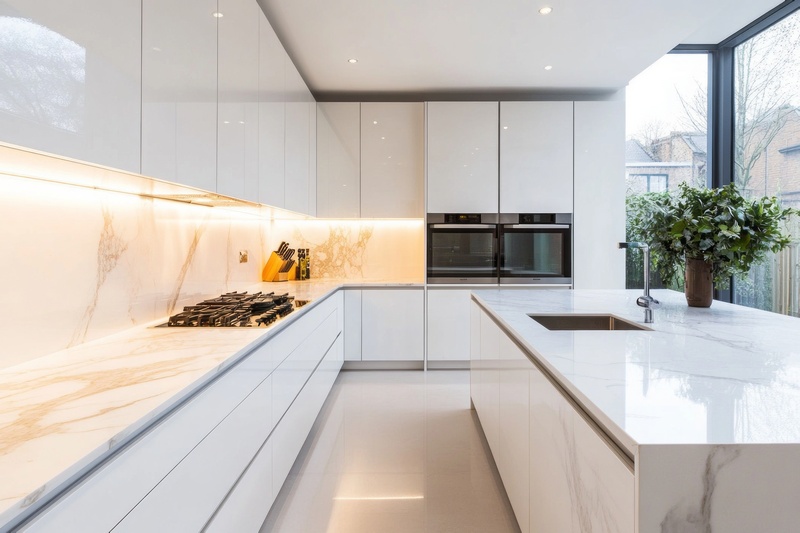
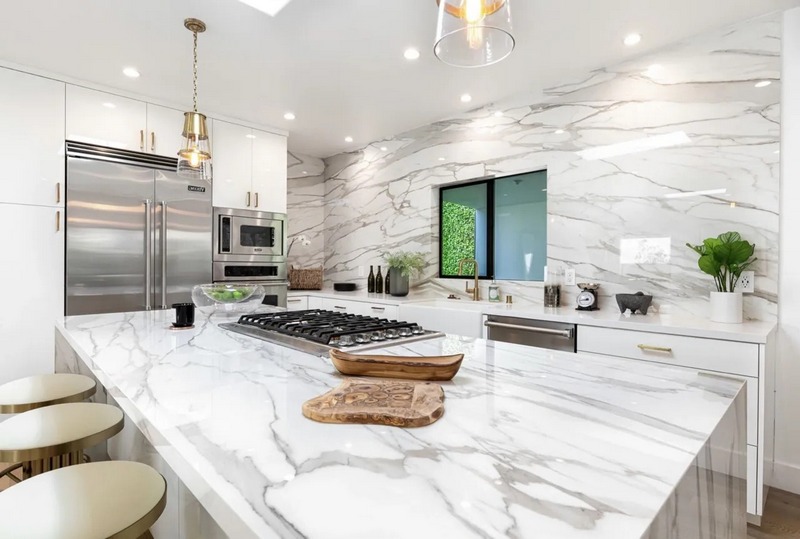
- Minimalist and contemporary home designs: Excellent for homeowners seeking ultra sleek 12 mm slim profiles, seamless full height backsplashes, and integrated waterfall end panels.
- Low maintenance seekers: Tailored for busy families who do not want to manage annual sealing schedules or worry about lemon juice, vinegar, or wine staining their island.


