

Marble's soft veining can brighten a kitchen, but its sensitivity to acids makes some homeowners hesitate. Lemon juice, vinegar, and everyday spills can leave marks that change the finish.
The best marble alternatives for countertops preserve that appearance while offering care requirements better suited to your household. Quartz, quartzite, porcelain, and several manufactured surfaces deserve a closer look.
What makes a countertop look like marble?
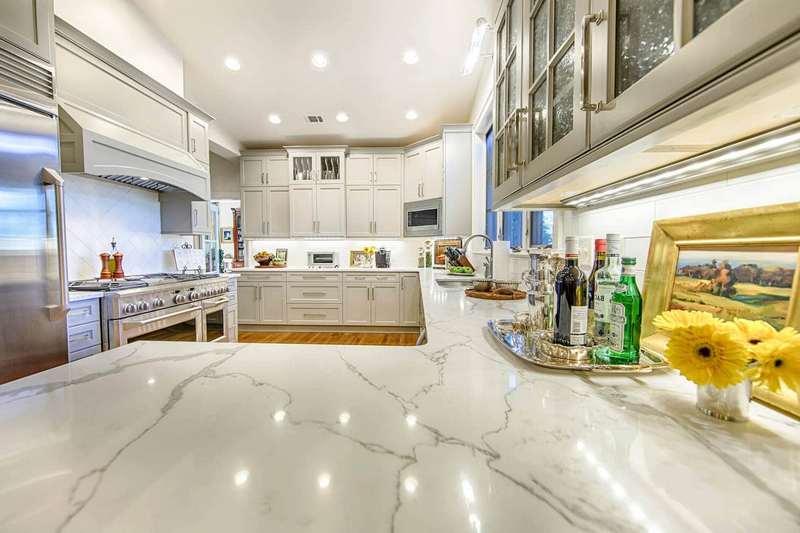
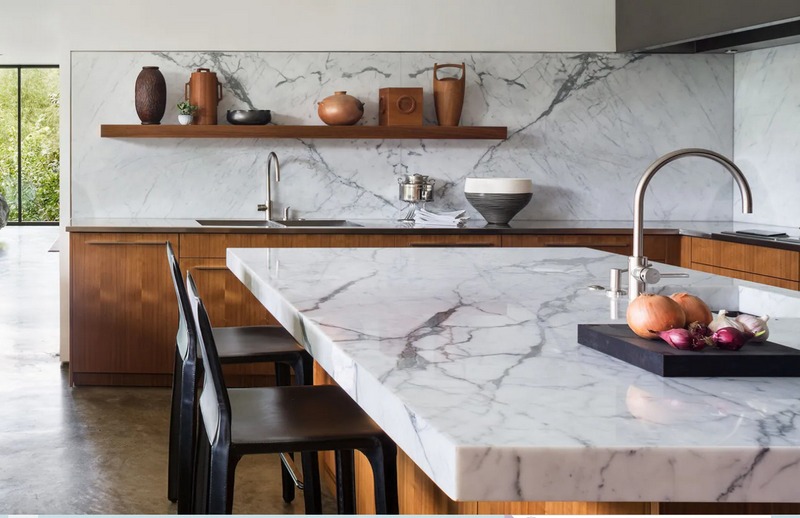
Convincing marble patterns combine a layered background with irregular veins. Some resemble quiet Carrara stone, with fine gray lines. Others recreate Calacatta's broader movement and warmer accents.
When comparing countertops that look like marble, inspect the spaces between the veins as carefully as the veins themselves. Flat, uniform backgrounds can make a surface appear printed. Subtle changes in tone often create a more convincing impression.
Scale matters across a kitchen island. A small sample might show an attractive gray line while hiding the much heavier pattern elsewhere on the slab.
Check these details before approving a design:
- Background color beside your cabinet door and wall paint.
- Vein size across the full island or countertop run.
- Pattern continuity at seams and exposed edges.
- Surface appearance under daylight and kitchen lighting.
Finishing changes the effect, too. Polished surfaces reflect light and emphasize contrast, while matte finishes create a quieter appearance. Neither finish guarantees better performance, so compare the care instructions for the exact product.
Best marble countertop alternatives
Start with the demands of the room. A busy cooking area needs different protection from a guest bathroom vanity.
The most suitable marble countertop alternatives balance appearance, stain resistance, repair options, and installed cost. Each material below has a distinct advantage, along with limitations worth understanding before ordering.
Quartz
Engineered quartz suits homeowners who want controlled veining and straightforward daily cleaning. Manufacturers combine mineral ingredients with binders and pigments to produce slabs in numerous colors and patterns.
A quartz marble look alike countertop can provide a white background with delicate gray movement or stronger gold accents. Compare several designs at full scale. The most dramatic sample is not necessarily the best choice beside patterned flooring or a detailed backsplash.
Quartz generally needs no sealing, but it still requires care. Use cutting boards and place hot cookware on trivets. Heat can damage the resin, and unsuitable cleaners can affect the finish.
This material belongs near the top of the shortlist for indoor kitchens where predictable appearance and easy upkeep matter. Ask how the selected design will continue through exposed edges and across seams.
Quartzite
Quartzite offers natural variation that manufactured patterns cannot duplicate exactly. Pale slabs can have flowing bands, cloudy backgrounds, or fine crystalline movement.
For homeowners seeking a natural marble countertop substitute, verified quartzite is worth inspecting. Its appearance varies substantially between slabs. Choose the actual material reserved for your project rather than relying on a showroom sample.
Correct identification matters because some stones sold under quartzite trade names are marble or dolomitic marble. True quartzite resists etching from ordinary kitchen acids; marble does not. Sealing requirements depend on the slab's absorbency and treatment.
Ask your fabricator to confirm the stone's identity and explain its maintenance needs. Also review any fissures and their position relative to sink openings, seams, and unsupported sections.
Porcelain and sintered stone
Large porcelain slabs can reproduce marble patterns with considerable detail. Sintered surfaces offer another mineral-based option, although their composition and manufacturing processes differ between brands.
These materials appeal to buyers prioritizing resistance to heat, stains, and scratches. For example, Dekton identifies these characteristics among its countertop benefits. Product specifications should guide the comparison rather than treating every slab as equivalent.
Before selecting either material, examine an edge sample. Surface decoration may differ from the color or pattern inside the slab, making edge construction especially important.
Discuss handling, support, and cutout requirements with an experienced fabricator. A hard working surface can still suffer edge damage from a concentrated impact. Installation details deserve the same attention as the pattern.
Granite
Some light granites have flowing mineral patterns that suggest marble, although many show more visible grain. This gives buyers another natural option when a perfectly white background is not essential.
When a natural stone looks like marble, confirm its material classification before assuming how it will perform. Trade names describe appearance more reliably than geology. Ask about the specific slab's resistance to staining and acids.
Granite can work well beside simple cabinet fronts that allow its pattern to stand out. Inspect the whole slab because a small sample may miss darker deposits or broad color changes.
Compare its installed price with quartz rather than assuming either material always costs less. Slab selection, cutting requirements, and project layout can change the result.
Solid surface
Solid surface combines mineral fillers with acrylic or polyester resins. Veined designs offer a softer stone effect, while compatible adhesives allow fabricators to create discreet joints.
Its strongest practical advantage is repairability. Many scratches and other forms of damage can be addressed by a qualified professional, depending on their severity and the product. Corian advises using heat protection and consulting an authorized specialist for repairs.
Choose this option when smooth transitions and the possibility of refinishing matter more than crystalline depth. Ask to see a finished installation, since a small sample will not demonstrate seam visibility.
Laminate
Laminate offers printed marble patterns over a supporting substrate. Large pattern formats can create a convincing visual effect without requiring a full stone slab.
Modern marble imitation designs include restrained gray veining and bolder, more decorative patterns. Formica offers marble-inspired surfaces in its laminate collections. Compare edge treatments alongside the main surface, since the edge strongly affects the finished appearance.
Protect laminate from hot cookware, direct cutting, and standing water around vulnerable joints. Deep damage is harder to disguise than minor wear on a repairable solid surface.
For a budget-focused renovation, request a complete installed quote. Custom edges and complicated layouts can narrow the price difference between materials.
Comparing marble look options
Evaluate the finished installation rather than ranking materials by appearance alone. A beautiful slab may require extra seams, while another product may fit the layout more efficiently.
The following comparison highlights practical differences. Confirm each manufacturer's requirements and the fabricator's recommendations before making a final selection.
Bring reference photos instead of relying on a label such as "looks like marble countertops". Show the supplier which background color and vein pattern you prefer. Include a cabinet sample so the comparison reflects your actual room.
What is synthetic marble?
Synthetic marble is a broad commercial description rather than a single material specification. Sellers may use it for cultured marble, engineered stone, or other products designed to resemble natural marble.
Before buying a synthetic marble countertop, ask for the precise composition and intended application. Cultured marble typically combines marble dust or mineral filler with resin. A protective gel coat commonly forms its exposed surface.
Cultured marble is often used for vanity tops, shower components, and integrated bathroom sinks. Its coating provides a smooth surface that generally needs mild cleaning rather than sealing. Abrasive products can damage that finish.
Do not assume bathroom products are suitable for a kitchen. Confirm heat restrictions, approved cleaners, and warranty coverage for the intended location.
Engineered quartz belongs to a different product category, with its own composition and performance specifications. Obtain the written care guide before comparing either option on price.
How much do marble look countertops cost?
Installed pricing depends on the selected material and the work required to fit it. Square footage provides a starting point, but it does not capture every fabrication expense.
For budgeting, marble look countertops should be compared using quotes that include the same scope. Cabinets, Countertops & More publishes general installed ranges of $60 to $150/ft² for quartz and $80 to $220/ft² for quartzite. These are planning figures, not a quote for a particular slab or kitchen.
At those ranges, 40 ft² would represent approximately $2,400 to $6,000 for quartz or $3,200 to $8,800 for quartzite. Confirm what the estimate includes before using it as your total renovation budget.
Waterfall panels, decorative edges, sink cutouts, and complicated vein matching can increase costs. Removing existing counters, reconnecting plumbing, and modifying cabinets may appear as separate charges.
Material yield also matters. A layout requiring another slab can cost more even when the finished surface area changes only slightly.
Compare maintenance and potential repair expenses over your expected ownership period. A lower initial price does not automatically deliver lower lifetime cost, but expensive materials do not guarantee savings either.
How to choose the best alternative to marble countertops
Start with your daily routine and the room's layout. Consider where hot appliances sit, how often you cook, and whether periodic sealing would become an unwanted chore.
The best alternative to marble countertops should fit those habits before it satisfies a design trend. Narrow the selection using this process:
- Set an installed budget that includes removal, cutouts, edges, and any plumbing work.
- Identify the desired background tone and vein scale using reference photos.
- Compare suitable materials with your cabinet, flooring, and backsplash samples.
- Review the slab layout, seam positions, and exposed edge details.
- Confirm care instructions, availability, and the final written scope.
Check samples in the kitchen during daylight and under evening lighting. A warm white slab may appear yellow beside cool cabinetry. Strong gray veining can also compete with a busy backsplash.
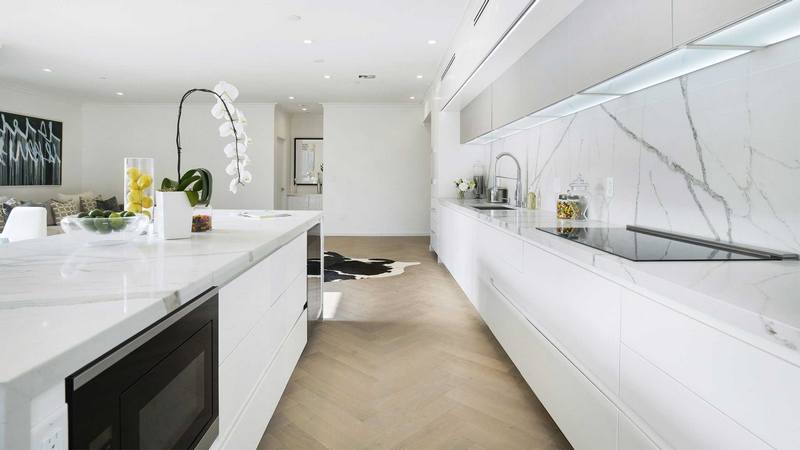
For large islands, request a layout showing where the major veins will fall. Review waterfall transitions before cutting begins. This is the stage to resolve an awkward pattern break.
Cabinets, Countertops & More specializes in quartz, granite, and quartzite fabrication and installation. Its Cleveland showroom welcomes homeowners and trade professionals, and the company works with contractors, designers, and builders.
Bring approximate dimensions, cabinet samples, and reference photos to discuss suitable options. Ask for current availability and a project-specific estimate before committing to a material.


