

Engineered quartz countertops offer high durability and low maintenance for modern kitchens and bathrooms. Even though the non-porous surface resists most everyday spills, stubborn marks can still settle on the top resin layer. Learning how to clean stubborn marks safely protects your investment without damaging the finish.
Are quartz countertops stain-resistant?
Engineered quartz consists of roughly 90% to 93% ground natural quartz crystals bound together with 7% to 10% polymer resins and color pigments. This manufacturing process creates a solid, non-porous slab that does not require regular sealing like granite or marble. Liquids cannot easily penetrate deep into the material under standard conditions.
Homeowners often ask if engineered stone can develop spots when exposed to dark liquids. The short answer is that quartz is stain-resistant, but not stain-proof. The stone particles themselves resist liquid absorption, yet the resin binder remains vulnerable to chemical reactions, heat, and surface-level pigment transfer.
Understanding how to remove stains from quartz countertops requires distinguishing between surface discoloration and permanent chemical etching. True stains happen when intense pigments adhere to the resin. Chemical damage occurs when harsh cleaners, strong acids, or high-alkaline products break down the resin matrix.
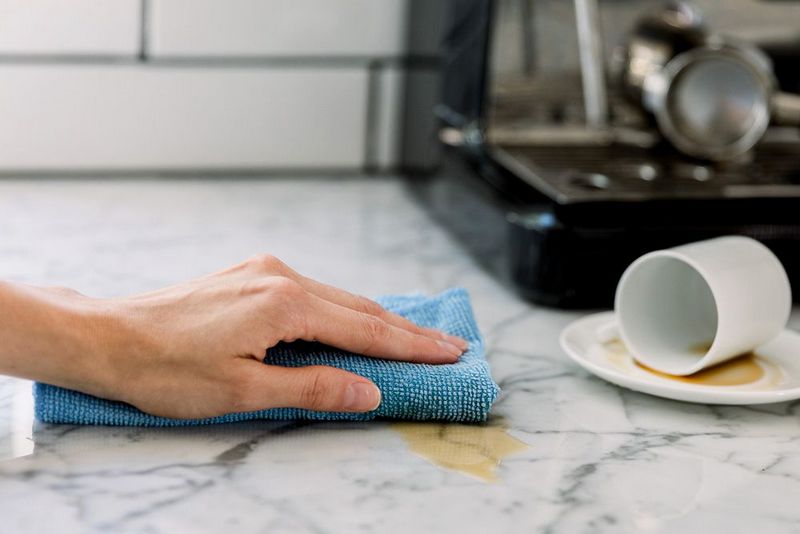
Common causes of stains on quartz countertops
Daily kitchen activities expose your countertops to multiple staining agents. The most frequent causes of discoloration include:
- Dark beverages: Red wine, black coffee, black tea, and dark sodas contain concentrated tannins that bond with the surface resin if left to dry.
- Highly pigmented foods: Turmeric, saffron, curry powder, tomato paste, mustard, and artificial food coloring leave bright marks quickly.
- Cooking grease and oils: Olive oil, butter, and frying grease attract airborne dust, creating cloudy patches that resist standard water rinsing.
- Hard water deposits: Tap water rich in calcium and magnesium evaporates, leaving white crusty rings around faucets and sink edges.
- Metal contact: Wet cast iron skillets, tin cans, steel wool pads, and metal cutlery cause oxidation marks on light quartz slabs.
- Permanent markers and ink: Pens, markers, and printer ink transfer pigments that bond with polymer resins.
- Chemical discoloration: Oven cleaners, drain openers, bleach, paint strippers, and citrus-based degreasers cause dull chemical burns.
How to get stains out of quartz countertops
Routine cleaning handles light residue, but stubborn spots require structured intervention. Follow these sequential steps to treat surface discoloration safely.
Step 1: Clear the Surface and Wipe with Mild Soap
Start with the gentlest cleaning method before moving to stronger solvents. Mix warm water with 2 to 3 drops of neutral pH liquid dish soap in a bowl.
Dip a soft microfiber cloth into the soapy solution and rub the affected spot in circular motions for 30 sec. Wipe away the suds with a clean damp cloth, then dry the area completely.
Step 2: Apply Isopropyl Rubbing Alcohol
When researching how to get stains out of quartz countertops, 70% isopropyl alcohol is one of the most effective solutions for oil-based marks, ink, marker pens, and sticky residue. Alcohol dissolves greasy adhesives and pigment bonds without stripping the protective resin binder.
Pour a small amount of 70% rubbing alcohol directly onto a microfiber cloth. Rub the spot firmly for 1 to 2 min. For dried spills, place an alcohol-dampened paper towel over the mark for 5 min to soften the residue, then wipe clean.
Step 3: Use a Gentle Baking Soda Paste
Baking soda provides mild mechanical lifting action without scratching the smooth quartz surface. This method works well on coffee, tea, and organic food pigments.
- Combine 4 tsp of baking soda with 2 tsp of warm water in a small cup to form a thick, spreadable paste.
- Spread the paste over the discolored area with a soft sponge.
- Let the mixture sit undisturbed for 10 to 15 min.
- Wipe the paste away using a damp microfiber towel in light circular motions. Do not scrub forcefully.
- Rinse the area with clean water and dry thoroughly.
Step 4: Soften Dried Residue with a Plastic Scraper
Does quartz countertops stain from dried candle wax, paint drops, gum, or hardened food crusts? Physical removal with the correct tool is the safest approach.
Hold a flexible plastic scraper or plastic putty knife at a 45-degree angle against the quartz surface. Push forward gently to lift the dried matter. Never use metal blades, razor tools, or steel wool, as metal leaves dark gray scratches on quartz.
Step 5: Clean Mineral Film with Diluted White Vinegar
Hard water scale and soap scum build up around sinks over time, creating a dull haze. While undiluted vinegar is acidic, a diluted solution removes mineral crusts without damaging the stone when used briefly.
Mix equal parts water and distilled white vinegar in a spray bottle. Spray the mineral buildup and let it sit for no longer than 1 to 2 min. Wipe immediately with a wet microfiber cloth, then rinse the surface with fresh tap water to neutralize the acid.
Step 6: Final Rinse and Microfiber Buffing
Always finish any cleaning protocol with a clean water rinse. Lingering soap films, alcohol traces, and mineral deposits attract new dirt quickly.
Rinse the cleaned zone using a wet sponge, then buff the area dry using a dry microfiber cloth. Buffing restores the original factory luster and prevents water spots.
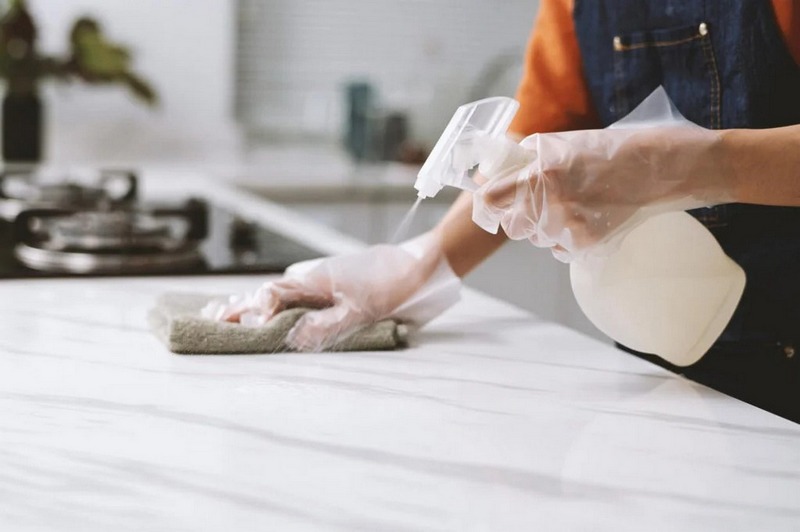
How to remove rust stain from quartz countertop
Rust stains occur when wet metal objects sit on the countertop surface for several hours. The iron oxidizes, leaving an orange or reddish-brown mark that penetrates into micro-crevices.
When figuring out how to remove rust stain from quartz countertop surfaces, avoid traditional rust removers containing hydrofluoric acid or muriatic acid. These industrial chemicals dissolve resin bonds instantly and ruin the finish permanently.
Follow this targeted process for rust removal:
- Select a mild oxalic-acid cleanser, such as Bar Keepers Friend in liquid or soft cleanser format. Powder formulas can be used if mixed with enough water to eliminate abrasive grit.
- Apply a dime-sized amount of the liquid cleanser onto a damp microfiber cloth.
- Dab the product directly onto the rust mark.
- Rub the spot very gently for 30 to 45 sec. Keep the contact time under 2 min to prevent chemical dulling.
- Wipe the area immediately with a soaking wet cloth to remove all chemical residue.
- Dry the spot with a clean towel and inspect the stone under direct light.
What to do if the stain won’t come out
Some marks resist standard household methods. If you are dealing with a deeply set stain on quartz countertop surfaces, advanced techniques can lift the pigment safely.
Apply a specialty stone poultice designed for engineered surfaces. Commercial poultice powders work by drawing embedded pigments out of microscopic surface texture through capillary action. Mix the poultice powder with water until it reaches peanut butter consistency, apply a 0.2″ (5 mm) layer over the mark, cover it with plastic wrap, and tape the edges down with painter tape.
Poke 2 small holes in the plastic wrap to allow slow evaporation. Let the poultice dry completely for 24 to 48 h. As the paste dries, it pulls the pigment away from the stone. Scrape the dried powder off with a plastic spatula, rinse with clean water, and dry.
If discoloration persists after a poultice application, the problem might be chemical etching rather than a topical stain. Harsh chemicals can dissolve the resin layer, leaving a chalky white or dull gray spot.
When standard solutions fail on how to clean quartz countertops stains, consult a certified stone restoration specialist. Professional technicians use specialized polishing compounds, diamond-impregnated pads, and variable-speed polishers to recondition engineered stone without ruining factory tolerances.
How to prevent stains on quartz countertops
Preventative maintenance requires much less effort than stain removal. Implement the following everyday habits to keep your quartz surfaces pristine:
- Wipe up spills immediately: Clean up coffee, wine, citrus juice, and cooking oil within 5 min of contact.
- Use cutting boards: Never chop food directly on the countertop. Knives create micro-scratches that trap food coloring and grease.
- Place hot pads and trivets: Sudden thermal shocks from hot pans exceeding 302°F (150°C) crack the quartz and burn the resin binder.
- Keep metal off the surface: Store wet cast iron pans, steel cans, and metal utensil holders on trays or silicone mats.
- Avoid harsh chemical cleaners: Never use bleach, ammonia, oven cleaners, drain openers, acetone, paint thinners, or high-alkaline degreasers (pH above 10).
- Do not apply granite sealers: Engineered quartz is non-porous; topical sealers cannot penetrate the material and will dry into a hazy, streaky film that traps dirt.


