

The same granite can look crisp and reflective or soft and understated, depending on its surface finish. That choice also affects how readily you notice fingerprints, streaks, and daily wear.
Choosing between glossy and matte granite starts with your lighting, cleaning habits, and preferred appearance. Choose from physical samples before committing to a countertop. Consider daily use. Review samples under realistic lighting.
What is honed granite?
Honing uses abrasives to create a smooth surface with little reflection. Fabricators stop before the final polishing stages that produce a glossy sheen.
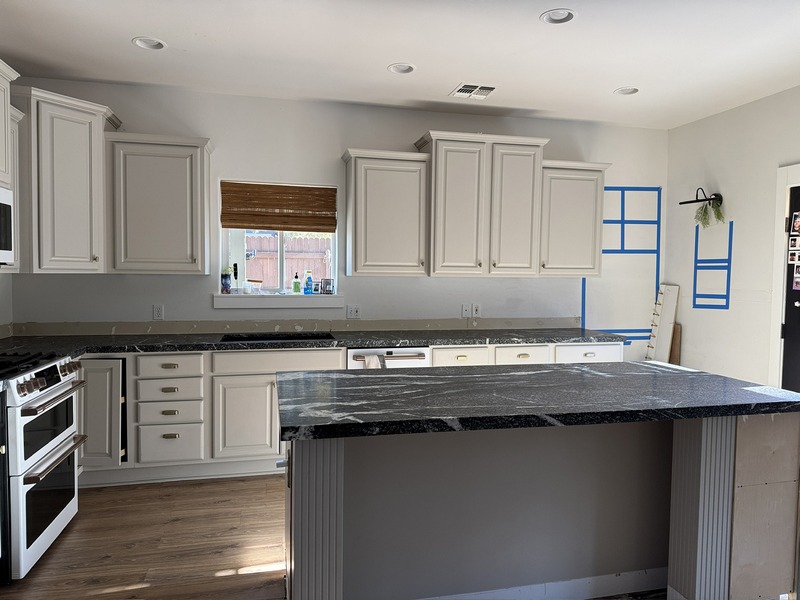
Honed granite features a deliberately matte or satin surface The stone retains its mineral pattern, although colors often appear softer than they do under a polish.
Honing does not create the textured ridges associated with a leathered finish. It also does not mean the slab has been left rough after sawing.
The term unpolished granite can describe several surfaces, so request the exact finish when ordering. A honed sample should show the sheen you expect across the countertop and its exposed edges.
Run your hand over the sample and tilt it toward a window. Some honed surfaces have a faint sheen, while others look flatter. Approve the actual appearance rather than relying on a finish name alone.
What is polished granite?
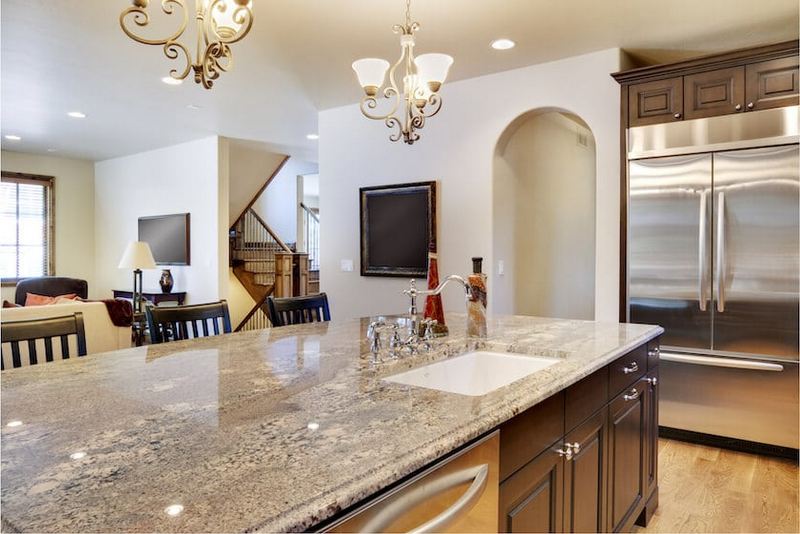
Polished granite undergoes progressively finer abrasive stages until the surface reflects light clearly. This highlights mineral crystals, strengthens contrast, and deepens color. The shine comes primarily from mechanical finishing, not a painted glossy sealer, though some slabs receive factory resin treatments. Finished granite includes glossy and matte options. Polishing is a specific surface treatment, not a guarantee against liquid absorption or damage. View polished samples under your intended lighting. Ceiling fixtures can create sharp reflections barely visible in daylight, and large islands may repeat multiple pendant reflections.
Pros and cons of each finish
Both options can work in kitchens and bathrooms. Their advantages become clearer when you consider the marks you notice and the appearance you want between cleanings.
Polished granite: advantages and disadvantages
Polished stone suits rooms where the countertop's pattern is a design feature. Its reflective surface can complement painted cabinetry, glass tile, or brushed metal hardware without requiring every nearby material to shine.
- Color definition: Polishing emphasizes contrasting minerals and makes many dark stones look richer.
- Routine wiping: A smooth surface is convenient for removing everyday crumbs and food residue.
- Light reflection: Gloss adds highlights, but direct sunlight and pendant fixtures can create distracting glare.
- Visible residue: Water spots, cleaning streaks, and fingerprints may stand out, especially on dark, uniform slabs.
Pattern matters as much as sheen. A busy, multicolored slab may disguise minor marks better than a nearly solid black surface with the same finish.
Damage that interrupts a reflective surface can be noticeable from certain angles. Avoid treating gloss as evidence of extra structural strength; edge chips and cracks depend on other factors.
Honed granite: advantages and disadvantages
A honed finish on granite softens reflections and gives cabinetry more visual attention. It works particularly well when you want stone movement without a mirrorlike surface.
The matte appearance can also reduce the contrast of some fine surface marks. That visual benefit does not make the stone harder or immune to scratches.
- Reduced glare: Diffused reflections suit bright rooms and seating areas facing large windows.
- Subtle appearance: Muted colors can coordinate with natural wood, matte tile, and quieter decorative schemes.
- Oil visibility: Fingerprints and greasy smudges can create darker patches, particularly on dark stone.
- Protection needs: Some honed slabs absorb liquids more readily and benefit from an appropriate penetrating sealer.
Handle the sample before deciding. Touch it with clean hands, then inspect the surface from several angles to see how obvious ordinary handling marks become.
Honed vs. polished granite: performance and practical differences
When comparing honed granite vs polished granite, separate appearance from the properties of the slab itself. Mineral composition, absorption, factory treatments, and fabrication quality all affect the result.
Finish alone cannot tell you how a particular countertop will perform. Use the following differences to frame questions for your supplier.
Color and room lighting
Polishing creates stronger color saturation and clearer reflections. Honing scatters light, making dark stone appear charcoal instead of deep black. Compare samples beside cabinet doors and backsplash materials under both daylight and your evening lighting. A color-enhancing treatment deepens a matte surface without matching mechanical polish. Request a treated sample before approval, as the color change is hard to reverse. For an island, view the stone both seated and standing; reflections attractive from the doorway can distract where you eat or work.
Fingerprints and everyday cleaning
The practical difference between honed and polished surfaces often becomes obvious near the cooktop and sink. Gloss can reveal streaks, while dark matte stone can make oily fingerprints conspicuous.
Neither appearance tells you whether the surface is hygienically clean. Both require regular removal of food residue and suitable cleaning products.
Use a soft cloth with a cleaner approved for the stone and its treatment. Follow the label, remove residue as directed, and dry the surface to limit water marks.
Persistent haze may come from excess cleaner or sealer residue. Ask the installer to identify it before trying abrasives or applying another product over the affected area.
Absorption and sealing
Honed stone is often more absorbent than polished stone, though slab variation makes a universal sealing schedule unreliable. Ask if your material needs an impregnating sealer suited to its finish, and follow product reassessment guidance instead of resealing automatically. Sealing improves stain resistance without making granite stainproof. Blot spills promptly, especially cooking oil, rather than relying on the treatment. A supplier may recommend a water test to gauge protection; temporary darkening shows moisture entry, not total stain resistance.
Scratches, chips, and heat
Altering sheen does not change mineral hardness. A matte surface hides fine scratches better, while a polished reflection highlights them. Use cutting boards and lift heavy cookware instead of dragging it. Protect sink cutouts and exposed corners, where impact causes chips regardless of finish. Granite tolerates heat well, but trivets protect against thermal shock and damage to resins or treatments. Neither finish fixes structural weaknesses; proper support, seams, cutouts, and handling remain essential during fabrication and installation.
Price and availability
A useful honed granite vs polished price comparison starts with the same stone, thickness, edge profile, and installation scope. Otherwise, differences in the quotes may have little to do with sheen.
Polished slabs are commonly stocked, while a matte option may require additional processing or sourcing. Availability varies by supplier and color.
Request an itemized quote covering finish preparation, edges, cutouts, delivery, and installation. Confirm whether samples show the treatment included in that price.
Avoid assuming fewer polishing stages must mean a lower retail cost. Additional handling and custom work can offset any apparent processing savings.
Can you change the finish of existing granite?
An experienced stone restoration specialist can often hone a glossy countertop or polish a matte surface. Feasibility depends on the particular stone, its condition, access, and previous treatments.
Refinishing involves controlled abrasion across the surface. A bottled shine product will not reproduce the same result as professionally polishing the stone.
Assess the countertop before refinishing
Have the specialist inspect cracks, repairs, seams, edge profiles, and areas around sinks. Factory resins or color treatments may respond differently when material is removed.
Ask for an inconspicuous test or a matching offcut sample to clarify what is honed granite in appearance on your specific slab. A change in sheen can expose variations that were less noticeable in the original finish.
Discuss how the contractor will achieve consistent results along walls and around fixtures. Matching the main surface to narrow edges can require considerable work.
Plan the work in sequence
Before accepting a proposal, establish what the price covers and how the kitchen will be protected. Include cleanup and any restrictions on using the surface afterward.
- Inspection: Have a specialist identify the stone, existing treatments, and defects that could affect the work.
- Sample approval: Agree on the target sheen and color using a representative test area or offcut.
- Site preparation: Confirm protection for cabinets, appliances, and floors, plus any fixture removal needed for access.
- Refinishing: Let the specialist complete the abrasive stages and check consistency across the top and edges.
- Final care: Approve any recommended sealing, observe curing instructions, and obtain written cleaning guidance.
Compare the restoration quote with replacement if the layout or sink arrangement also needs changing. Refinishing preserves the existing geometry and will not resolve an unsuitable countertop layout.
Which should you choose: honed or polished granite?
Start with how the room functions. Then use samples to confirm which appearance works with the materials you intend to keep.
Choose honed or polished granite by balancing glare, visible marks, and the cleaning routine you will maintain. There is no finish that automatically wins in every room.
Kitchens and islands
Polished stone is a practical starting point when you want defined color and straightforward wiping. Examine a darker sample carefully if streaks and dried droplets bother you.
Honing is appealing for an island beneath bright windows or strong pendant lighting. Test handling marks before choosing a dark matte slab for a busy preparation area.
Keep the full cabinet and backsplash combination in view. Several reflective materials together can create more visual activity than the countertop sample suggests alone.
Bathrooms and utility rooms
When comparing polished vs honed granite for a vanity, consider cosmetics, soap residue, and water around the faucet. Choose a surface whose appearance you accept after ordinary use, then keep products on a washable tray.
In laundry and utility spaces, prioritize suitable cleaners and prompt spill removal. A finish cannot protect the stone from every concentrated household chemical.
Confirm your selection locally
Cabinets, Countertops & More serves Cleveland homeowners and trade professionals with cabinet and countertop services. The company fabricates and installs granite, quartz, and quartzite countertops.
Bring cabinet samples, room photos, and approximate dimensions to its Cleveland showroom. Ask about available granite finishes and request a fabrication and installation estimate for your preferred slab.
Confirm finish availability before finalizing the design, particularly when a custom surface is required. Include the exposed edges and backsplash pieces in the approval so the completed installation matches your expectations.


