

Quartzite brings natural veining and a durable surface to kitchen walls. It suits homeowners who want visible stone character and accept occasional maintenance. Choosing the right material, finish, and installation method matters as much as choosing the color.
What is a quartzite kitchen backsplash?
Quartzite is a natural stone formed when sandstone undergoes heat and pressure. Its interlocking quartz grains create a hard surface with patterns that vary between slabs.
A quartzite kitchen backsplash covers the area above a countertop, helping protect the wall from cooking splashes and sink spray. It can stop beneath upper cabinets or extend behind a hood.
Quartzite differs from engineered quartz, which combines mineral particles with binders. The names sound similar, but the materials have different care requirements and installation considerations. Confirm which product appears on your estimate before approving it.
Stone names alone do not reliably establish performance. Ask the supplier to identify the material and explain its absorption characteristics, surface treatments, and recommended maintenance.
Pros and cons of a quartzite backsplash
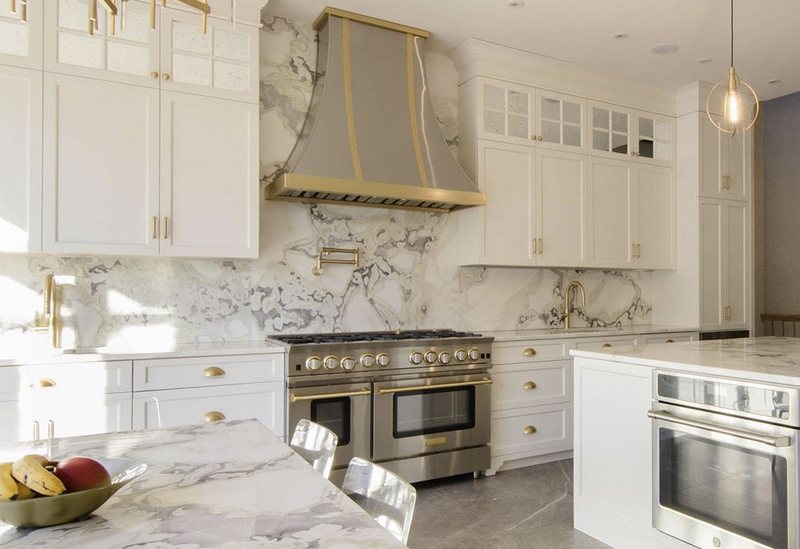
The main appeal is the combination of natural movement and everyday durability. The main tradeoffs are fabrication expense, weight, and variable porosity.
A quartzite backsplash works best when the selected stone suits your cleaning habits and the installer accounts for the wall conditions. Compare samples alongside cabinet doors and flooring before committing.
Advantages of quartzite backsplashes
Natural veining gives a kitchen a pattern that does not repeat like a printed surface. Some varieties have quiet, cloudy movement; others contain strong bands that become the room's focal point.
Practical advantages include:
- Surface hardness: Genuine quartzite resists everyday scratching, although exposed edges can still chip.
- Heat tolerance: The stone generally tolerates kitchen heat well. Appliance clearances and installation materials still require attention.
- Fewer joints: Large panels reduce the number of grout lines that need cleaning.
- Design continuity: Matching stone can connect the countertop and vertical surface visually.
The material offers flexibility beyond white and gray schemes. Cream, gold, and other mineral tones can complement wood cabinets or soften a kitchen with darker finishes.
Inspect the actual slab whenever possible. A small sample may show the background color while missing the strongest veins, patches, or changes in tone.
Disadvantages of quartzite backsplashes
Porosity varies, so some selections absorb liquids more readily than others. Grease near the range can leave stains if it remains on an absorbent surface.
Sealer improves stain resistance but does not make stone stainproof. A homeowner who wants minimal maintenance may prefer a suitable glazed ceramic or porcelain alternative.
Fabrication also requires care. Cutting hard stone, finishing exposed edges, and creating outlet openings contribute to the installed price. Cracks or chips around an opening can be difficult to repair discreetly.
Weight affects installation planning, particularly with large panels. Existing wall finishes may need removal or preparation before the installer can specify a suitable attachment method.
Replacement deserves consideration too. A damaged panel may be difficult to match later, especially when the original stone has distinctive movement.
Types of quartzite kitchen backsplashes
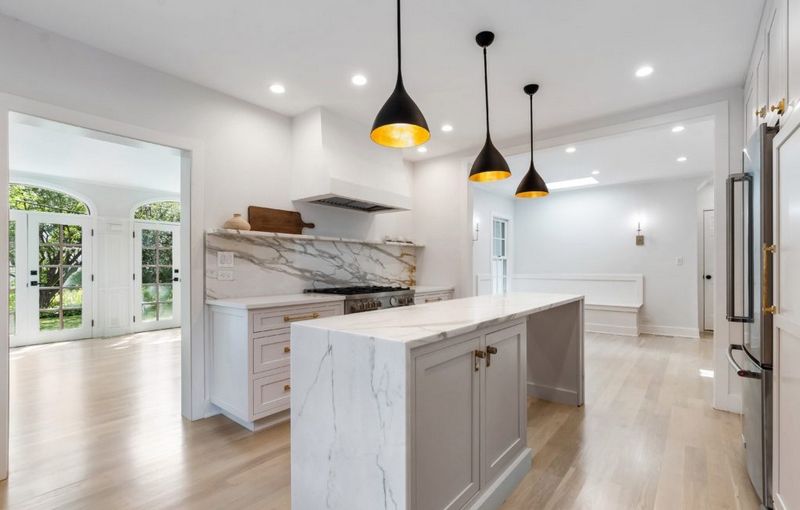
Choose the format according to wall dimensions, desired pattern, and budget. Slabs emphasize broad veining, while tiles divide the surface into smaller sections.
Finish also affects daily use. Smooth surfaces are generally easier to wipe than deeply textured finishes, which can hold cooking residue in their recesses.
Quartzite slab backsplash
Large panels show more of the stone's original pattern. They can create a continuous visual field behind the sink or range.
A full-slab layout suits designs where veining is the main decorative feature. Panel dimensions, access, and stone condition determine whether the installation needs seams.
Discuss seam locations before fabrication. An uninterrupted appearance in a photograph does not mean every kitchen can use a single panel.
Request a layout showing the proposed cuts and vein direction. Mark the hood centerline and visible edges so the strongest movement lands where you want it.
If you are choosing a backsplash with quartzite countertops, reserve enough material for the entire layout. Matching by stone name alone may produce noticeable differences between batches.
Ask whether the countertop and wall pieces can come from the same slab or coordinated slabs. A consistent background color may matter more than an exact vein connection.
Quartzite tile backsplash
Smaller pieces offer more freedom around corners and compact wall sections. They also introduce a grout pattern that becomes part of the design.
Smaller tile pieces can suit a project where large panels are impractical or exceed the budget. Savings depend on tile selection, layout complexity, and labor.
Dry layout is useful because natural color variation can look uneven after installation. Mixing pieces from several cartons may help distribute those differences when the supplier recommends it.
Choose grout color deliberately. A close match creates a quieter surface, while contrast emphasizes individual pieces and the installation pattern.
Keep spare tiles from the original purchase. They may help with future repairs, although replacing a piece still requires care around neighboring stone.
Quartzite wall applications
Stone can extend above the usual splash zone or frame a window. Larger coverage makes pattern placement and edge details more noticeable.
A quartzite wall behind a range can serve as the kitchen's focal point. Balance dramatic veining with simpler cabinetry and restrained surrounding finishes.
Before fabrication, settle the practical details:
- Wall preparation: Have the installer assess flatness, condition, and the required support.
- Openings: Confirm outlet, switch, and fixture positions before cutting.
- Clearances: Allow space for faucet handles, appliance trim, and cabinet doors.
- Edges: Specify how exposed ends, corners, and transitions will be finished.
Stone thickness can reduce usable clearance behind a faucet. Check handle movement against the proposed finished surface, especially when the sink sits close to the wall.
Plan electrical adjustments with the appropriate professional. Moving outlets after the stone is installed may require expensive alterations.
Maintenance of quartzite kitchen backsplash
Routine care should address food residue without damaging the finish or existing treatments. Keep the supplier's written instructions with your installation paperwork.
Daily cleaning
Clean fresh splashes on a quartzite tile backsplash promptly, particularly cooking oil and strongly colored foods. Use a cleaner approved for the stone and its surface treatments.
Follow this sequence:
- Remove residue: Lift loose food with a soft cloth without dragging gritty particles across the surface.
- Wash gently: Apply the recommended cleaner according to its dilution and contact instructions.
- Rinse thoroughly: Remove cleaner residue with a clean, damp cloth.
- Dry carefully: Wipe with a soft towel to reduce streaks and water marks.
Avoid abrasive powders and aggressive scrubbing pads. Do not assume a general kitchen degreaser is suitable simply because the stone itself is hard.
Treat persistent stains according to their cause. Oil absorption, mineral deposits, and adhesive residue need different approaches, so consult the fabricator before trying stronger chemicals.
Sealing and joint checks
Ask whether your particular stone needs an impregnating sealer. Some varieties benefit more than others, and treatment frequency depends on absorption, exposure, and the product used.
Do not automatically reseal every year. Follow the supplier's assessment and the sealer manufacturer's instructions, including drying and curing requirements.
Darkening after water exposure may indicate absorption that deserves attention. Have the fabricator explain an appropriate test rather than applying more product over a damp surface.
Inspect the joint where the wall meets the countertop. Report gaps, loose sealant, or persistent moisture, and use the specified compatible material for repairs.
Cost of quartzite backsplash
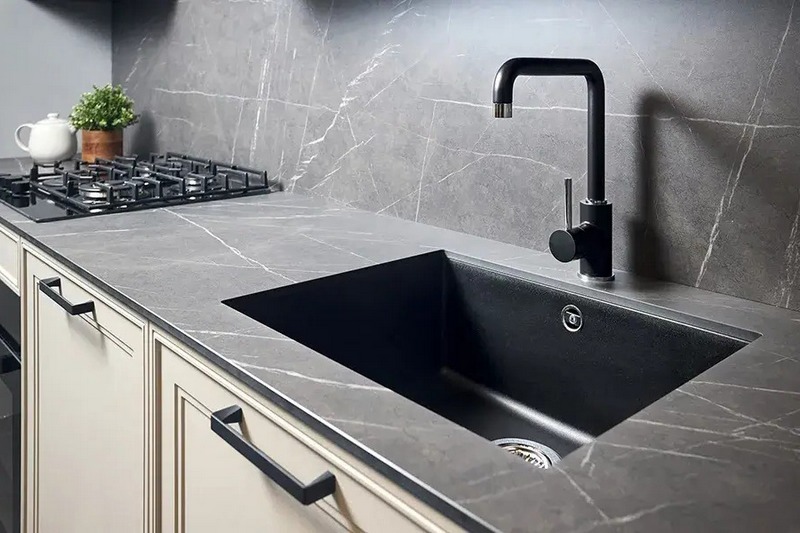
Installed cost depends on more than the visible wall area. Slab selection, material yield, fabrication, and access can change the estimate substantially.
What affects the estimate
A short, straight quartzite slab backsplash usually requires fewer operations than a tall panel with several openings. Rare colors and selective vein placement may also increase material costs.
Compare estimates that cover the same work:
- Material: Confirm the selected stone, finish, thickness, and purchasing basis.
- Fabrication: Include cuts, outlet openings, exposed edges, and seam preparation.
- Preparation: Identify removal, wall repairs, and any necessary electrical adjustments.
- Installation: Clarify delivery, handling, attachment, sealing, and cleanup.
A remnant may suit a small section if its dimensions and pattern work. Availability is limited to the pieces on hand, so flexibility can help.
Tile may reduce material expense, but detailed patterns and extensive cutting can offset that advantage. Compare complete installed totals rather than a slab price against a tile price alone.
Planning your project in Cleveland
Cabinets, Countertops & More specializes in quartz, granite, and quartzite countertop fabrication and installation. Its Cleveland showroom welcomes homeowners and trade professionals, including contractors, designers, and builders.
Bring wall measurements, kitchen photographs, and cabinet samples to discuss your project. Include appliance specifications and the proposed height of the stone.
Ask the team to confirm material availability and whether the requested vertical application fits the project scope. Request an itemized estimate covering the agreed preparation and installation work.
Before approving fabrication, review the layout and visible edges together. Resolve questions about seams and outlet placement while changes are still straightforward.


