

Kitchen countertops collect coffee spills, cooking grease, and crumbs every day. An easy care surface makes cleanup quicker and reduces the need for protective treatments. Quartz is a strong starting point, but porcelain, solid surface, and several other materials deserve consideration depending on your budget and cooking habits.
What makes a countertop low maintenance?
A practical countertop cleans easily, resists common stains, and needs little scheduled upkeep. Daily cleaning and occasional maintenance are different responsibilities. Wiping away sauce takes a moment; applying sealer or arranging professional refinishing requires more planning.
For many households, the lowest maintenance countertop combines a nonporous surface with good resistance to everyday wear. Spills remain on the surface instead of soaking into the material. That gives you an easier cleanup, although prompt attention still matters.
Look beyond stain resistance when comparing samples. A countertop may resist spilled wine yet scratch when someone drags a heavy appliance across it. Another may tolerate heat well but require periodic sealing.
These features help keep care manageable:
- No routine sealing: Eliminates a recurring treatment and its associated supplies.
- Smooth finish: Makes grease and dried food easier to remove.
- Stain resistance: Reduces the likelihood of lasting marks from ordinary spills.
- Practical edges: Simple profiles provide fewer grooves where residue can collect.
- Repair options: Allow some damage to be corrected without replacing the entire countertop.
Installation also affects future upkeep. Accessible sink edges and neatly finished joints are easier to clean than awkward gaps. Ask your fabricator where seams will fall and how the sink connection should be maintained.
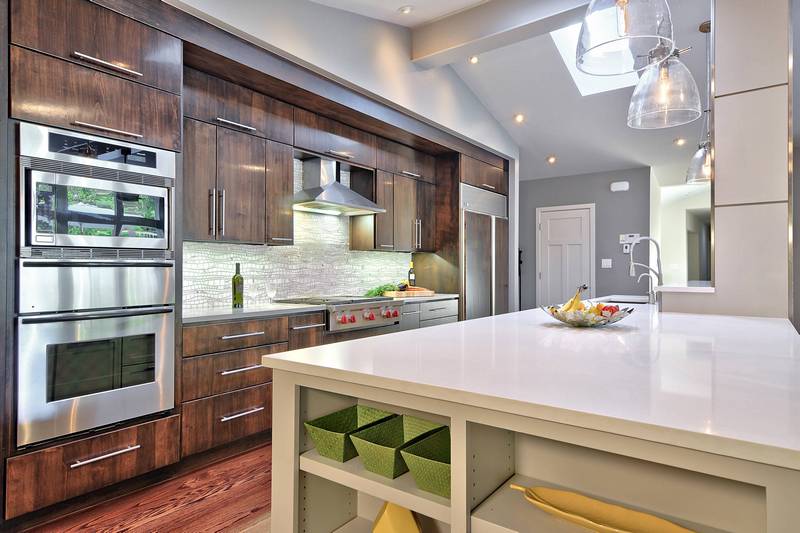
Color influences how often a counter appears dirty. Dark, uniform finishes can reveal water spots, while very pale surfaces show crumbs and colored residue. Take samples home to judge them under your kitchen lighting.
Lowest maintenance countertops for kitchens
The materials below offer different balances of cleaning effort, protective care, and repairability. Start with surfaces that suit your daily routine, then compare their appearance and installed cost. A beautiful sample becomes less appealing if its care instructions conflict with how you use the kitchen.
Quartz
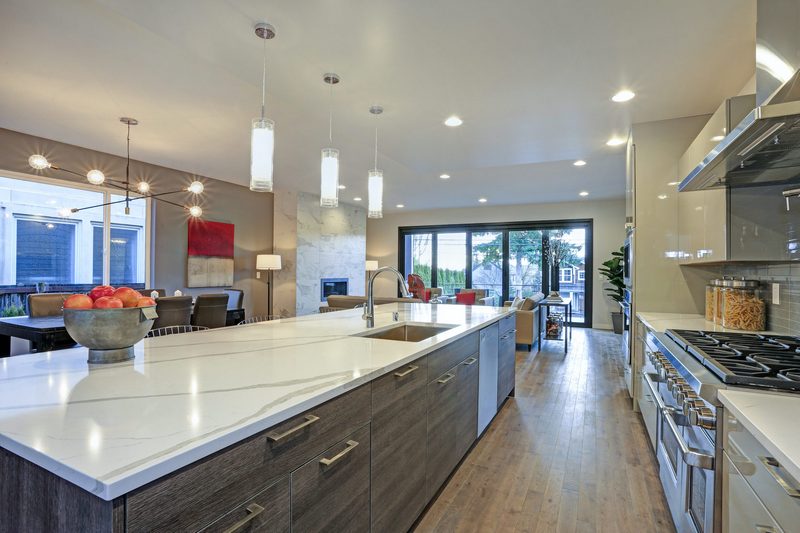
Quartz is an engineered surface made with mineral particles and binders. Its nonporous structure eliminates routine sealing. Everyday cleanup generally requires a soft cloth, warm water, and mild soap, making it practical for busy kitchens.
Consistent colors and patterns include designs resembling marble, offering a veined appearance without marble's sensitivity to acidic spills. Follow the brand's cleaning instructions, since some household cleaners can damage the surface.
Use trivets under hot cookware and follow guidance for appliances that release heat downward. Cutting boards protect both the finish and your knives.
Quartz is among the most practical low maintenance countertop materials because it requires no routine sealing and cleans easily. Compare finishes before ordering, as some matte designs show surface marks more readily. Cambria notes that markings on its matte finish can wash away with appropriate cleaning.
Porcelain
Porcelain countertops generally resist moisture and household stains, and many require no sealing. MSI confirms that its Stile porcelain slabs need no sealer, reducing routine upkeep in busy kitchens.
Remove food residue with a compatible cleaner and avoid abrasive products that could damage the finish. Check the manufacturer's instructions before treating stubborn marks.
Porcelain offers a stone appearance with limited routine treatment. Fabrication details still deserve attention, so ask about edge construction, exposed corners, and repair options before choosing a slab.
Surface durability does not guarantee that edges will withstand heavy impacts. Handle cast iron cookware carefully around sinks and countertop edges. Experienced fabrication and suitable support remain important.
Solid surface
Solid surface may be the least maintenance countertop for homeowners who want no routine sealing and the option to refinish scratches. Resins and mineral fillers create a nonporous worktop with inconspicuous seams. An integrated sink reduces joints around a frequently cleaned area.
Certain scratches and surface damage can be refinished, making repairability a useful advantage. The method depends on the product and finish, so consult the manufacturer or an authorized professional.
Protect the surface from heat and scratches during everyday use. Place hot cookware on protective pads and use cutting boards to preserve the finish without complicated cleaning.
Consider solid surface if you value a smooth appearance and future restoration options. Compare light and dark samples, as visible wear varies with color. Seek professional help for stubborn scratches.
Laminate
Laminate offers easy cleaning at a generally lower price than premium slab materials. It requires no stone sealer, and a soft cloth with mild cleaner handles everyday residue.
Protect seams and sink cutouts from standing water. Moisture reaching the substrate can cause swelling, so remove puddles promptly and avoid leaving wet cloths around joints.
Use cutting boards and trivets, since burns and deep cuts are difficult to disguise. Prevention matters more than refinishing. Ask your installer how exposed edges and joints will be protected.
Laminate suits projects prioritizing affordable installation and simple cleaning. Examine the finished edges alongside the decorative pattern. A carefully planned sink area simplifies daily care and helps prevent moisture damage.
Soapstone
Soapstone needs no protective sealing. Optional oil or wax treatments change its appearance, rather than providing necessary protection. Leaving the stone untreated removes that cosmetic task from your routine.
For homeowners considering [low maintenance stone countertops], soapstone suits those comfortable with scratches and gradual color changes. Its softer surface develops visible wear, which may disappoint anyone expecting a consistently polished, uniform appearance.
Ask your supplier about blending light scratches or restoring the finish. Follow guidance for your specific stone before sanding, since repairs should preserve a consistent appearance across the surrounding area.
Choose soapstone if you enjoy its changing character. Removing every small mark can make cosmetic upkeep more demanding than its lack of sealing suggests.
Granite
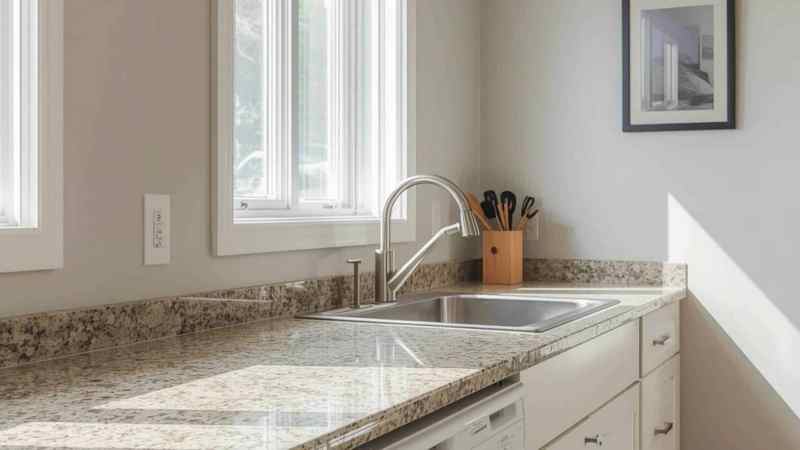
Granite suits homeowners who accept occasional protective care. Everyday cleaning is straightforward with an appropriate mild cleaner, while natural patterns can make crumbs and minor surface marks less obvious.
Sealing requirements vary with the stone and existing treatment. Rather than following a universal annual schedule, ask your fabricator how to assess your slab and when to renew protection.
A penetrating sealer reduces absorption without preventing every stain or damage. Clean spills promptly, use cutting boards, and protect the surface from heat.
Consider granite when natural variation matters more than eliminating maintenance. Review the full slab where possible and obtain written care instructions before installation to understand ownership beyond the showroom sample.
Best low maintenance countertop materials compared
The table below separates everyday cleaning from periodic treatment and common vulnerabilities. These are general comparisons, so the chosen product's care instructions take precedence.
Use the table to narrow your choices before reviewing samples. The best match depends on whether you most want to avoid sealing, visible wear, or difficult repairs.
Consider the whole installation as well as the exposed surface. Sink joints and seams still need attention even when the countertop itself requires no protective treatment.
Installation quality can make similar materials feel different in daily use. Ask to see examples of finished sink openings and seams. Those details reveal more about cleaning convenience than a small sample alone.
Are there really no maintenance countertops?
Every kitchen surface needs cleaning. Food residue, grease, and standing water do not disappear because a material resists absorption.
The phrase no maintenance countertops generally refers to surfaces that do not require recurring treatments such as sealing or waxing. It should not imply that cleaning and protection are unnecessary. Product descriptions sometimes blur this distinction, so read the care guide before buying.
Quartz and porcelain can eliminate sealing from your schedule. Laminate and solid surface also avoid that task, although each has different vulnerabilities. Soapstone's optional oiling is primarily an appearance choice.
Routine prevention remains simple: remove spills, use a cutting board, and protect the surface from unsuitable heat exposure. Keep an approved cleaner nearby so dried residue does not become a scrubbing project.
Also distinguish a stain from physical damage. A cleaner may remove coffee residue, but it cannot repair a burn or chipped edge. Aggressive scrubbing can make some problems worse.
Before attempting a repair, identify the material and contact its supplier. A short conversation can prevent an avoidable finish change.
How to choose the least maintenance countertop
Start with the tasks you want to avoid. Some homeowners dislike sealing, while others care more about hiding fingerprints or being able to repair scratches.
Your countertop should match your habits and expectations. A surface that needs no sealing may still disappoint if you dislike its visible smudges. Compare actual samples alongside written care instructions.
Use this sequence to narrow the decision:
- Identify your main concern. Decide whether stains, heat exposure, scratches, or scheduled treatments cause the most frustration.
- Check the care guide. Confirm approved cleaners, protective requirements, and any finish specific instructions.
- Compare samples at home. View them near the sink and under both daylight and evening lighting.
- Review installation details. Discuss seams, sink access, edge profiles, and support with your fabricator.
- Compare complete estimates. Include fabrication, installation, sink work, and any removal costs that apply.
Ask about repair options before committing. Find out who handles damage and whether repairs are likely to remain visible. Keep the selected product name and care instructions with your project records.
For Cleveland projects, Cabinets, Countertops & More specializes in quartz, granite, and quartzite fabrication and installation. Its showroom welcomes homeowners and trade professionals, and the business works with contractors, designers, and builders.
Bring cabinet samples, kitchen measurements, and your maintenance priorities to the showroom. Ask to compare suitable surfaces and discuss the installation details that affect daily cleaning. This helps connect your preferred appearance with a care routine you can comfortably maintain.


