

Quartz surfaces consist of 90% to 93% natural crushed stone bound with 7% to 10% polymer resins and pigments. This non-porous structure resists bacteria, moisture, and common stains better than natural marble or granite.
Even though engineered stone is durable, the resin binders remain sensitive to harsh chemicals, excessive heat, and abrasive scrubbing. Learning how to clean quartz countertops properly protects your investment, maintains a polished shine, and prevents permanent surface discoloration for decades.
What to clean quartz countertops with
Selecting safe supplies is the 1st step in surface maintenance. Because engineered stone has a sealed, non-absorbent resin matrix, you do not need caustic chemicals to achieve a sanitary finish.
Here is a breakdown of what to clean quartz countertops with for everyday sanitation:
- Warm water: High-temperature tap water loosens surface grease and lifts food particles without leaving residues.
- Mild dish soap: A gentle, pH-balanced dishwashing liquid breaks down cooking oils while protecting the resin surface.
- Microfiber cloths: Soft microfiber traps dust, lifts dirt particles, and absorbs water without scratching the factory polish.
- 70% Isopropyl rubbing alcohol: An effective disinfectant that evaporates rapidly and clears streaks without degrading polymer binders.
- Non-abrasive sponges: Yellow-and-green or cellulose cleaning pads marked non-scratch provide safe mechanical lifting power.
- Plastic scraper or putty knife: A flexible plastic edge removes hardened food deposits without gouging the stone.
Verify that the product label states pH-neutral (pH 6 to pH 8). Avoid multipurpose formulas that contain acidic agents, citrus extracts, pine oil, or sodium hypochlorite.
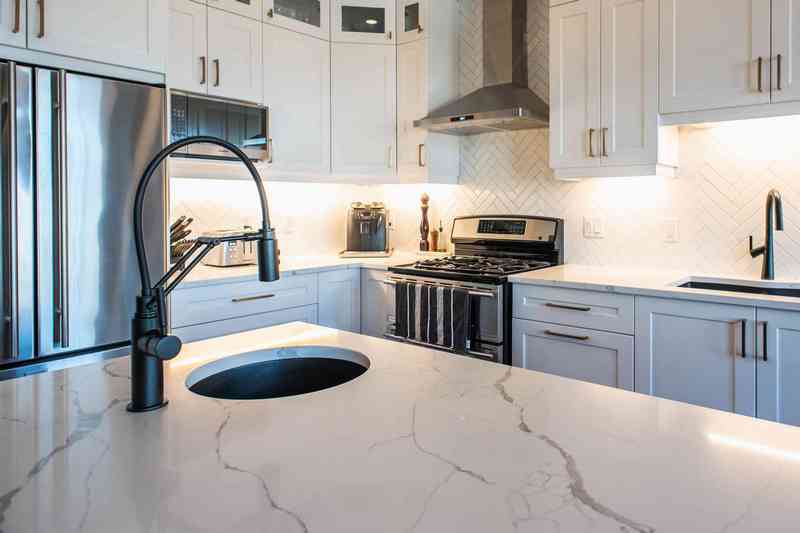
How to clean quartz countertops for different types of messes
Daily spills occur in every active kitchen. Because engineered stone reacts differently to organic pigments, oils, and minerals, applying tailored techniques is the safest way to clean quartz countertops without dulling the finish.
Coffee, Tea, and Wine Stains
Dark liquids contain heavy tannins and chromogens that bond to surface oils. If these spills evaporate on the slab, they leave visible rings.
- Blot the puddle immediately with a dry paper towel. Do not rub the liquid outward, as this spreads the perimeter of the mess.
- Wet a microfiber rag with warm water and 2 drops of gentle dish soap.
- Wipe the ring in circular motions for 30 sec.
- If a shadow remains, mix equal parts water and 70% isopropyl alcohol in a spray bottle. Mist the area and let it sit for 2 min.
- Wipe the liquid away with a clean cloth, then buff the area dry to restore the original luster.
Food and Grease
Hot cooking grease, butter, and pasta sauces leave an oily film that attracts airborne dust. Grease must be emulsified rather than smeared.
Apply warm water and dish soap across the greasy zone using a soft sponge. Work the soap into a light lather to dissolve lipids. Rinse the sponge with fresh water, wipe away the soapy suspension, and dry the counter immediately using a plush microfiber towel.
For thick, congealed grease rings near cooktops, the best way to clean quartz countertops is to apply a dab of specialized stone degreaser or alcohol-based spray. Let the solution loosen the grease bond for 3 min before wiping.
Turmeric and Mustard Stains
Curry powder, turmeric, and yellow mustard contain intense natural dyes. These yellow pigments bond quickly to the surface tension of the stone. If you spill mustard or curry, do not wipe it with a dry paper towel. Wiping pushes the pigment wider.
Spray the yellow spot heavily with your soap and water mixture. Let the liquid lift the pigment for 3 min. Use a wet microfiber cloth to pull the spill straight up and off the counter. If a yellow shadow remains, apply a generous spray of ammonia free glass cleaner. Wait 5 min and wipe clean.
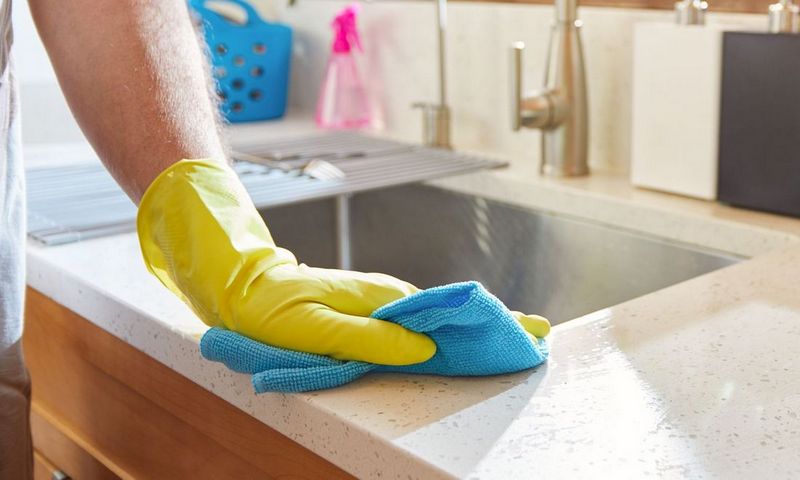
Dried Gunk, Sticky Residue, and Gum
Syrup, dried dough, candle wax, and melted sugar stick tightly to smooth resin surfaces. Pulling these materials by hand can tear at the polish.
- Soften sticky substances by holding a damp, warm washcloth over the residue for 5 min.
- To remove wax or chewing gum, place 3 ice cubes inside a plastic zip-top bag and set it on the substance for 10 min. The cold temperature crystallizes the material.
- Once the substance turns brittle, slide a plastic scraper beneath the edge to pop the deposit off the slab.
- Wipe away leftover residue with 2 ml of rubbing alcohol on a microfiber cloth.
Hard Water Spots and Mineral Deposits
Tap water with high calcium and magnesium content leaves chalky white rings around sink basins and faucets as moisture evaporates.
When selecting what to use to clean quartz countertops, never choose acidic descalers, lime removers, or toilet bowl cleaners. Instead, tackle mineral buildup with mild mechanical action and safe solvents:
- Soak a soft cloth in a 50/50 blend of 70% rubbing alcohol and distilled water.
- Lay the damp cloth directly over the mineral ring for 10 min to soften calcium bonds.
- Lift the cloth and gently scrub the spot with a non-scratch sponge pad.
- For stubborn crusts, hold a plastic putty knife at a 30° angle and scrape the flake flat against the stone surface.
- Rinse the area with distilled water and dry it completely with a clean towel.
Ink, Marker, and Dye
Permanent markers, vegetable dyes, transfer dyes from plastic shopping bags, and newspaper ink can penetrate the surface pores of the resin binder.
Dampen a cotton ball with 70% isopropyl alcohol. Dab the stained spot directly without scrubbing wide circles. The alcohol acts as an organic solvent, pulling pigment out of the polymer matrix. Repeat with fresh cotton balls until no pigment transfers onto the cotton.
How to remove stains from quartz countertops
Deep stains require targeted lifting methods that do not degrade the composite structure. When basic soap fails, follow these steps for advanced cleaning quartz countertops safely.
- Prepare a gentle poultice paste: Combine 3 tbsp of baking soda with 1 tbsp of warm water in a small bowl until it forms a thick paste resembling toothpaste. Baking soda provides mild alkaline cleaning with very low abrasiveness (Mohs hardness of 2.5, which is far softer than quartz minerals at 7).
- Apply the poultice: Spread the paste directly over the discolored area in an even layer approximately 0.5 cm thick. Ensure the paste covers the entire perimeter of the stain.
- Let the mixture draw out the stain: Cover the paste with plastic cling wrap to prevent the water from evaporating too quickly. Tape down the plastic edges with painter tape. Leave the wrap undisturbed for 15 min to 30 min. The moisture dissolves the stain while the alkaline baking soda draws it into the paste.
- Wipe and rinse: Remove the plastic wrap. Use a wet microfiber cloth to gently lift the paste. Do not grind dry baking soda crystals into the slab.
- Neutralize and inspect: Rinse the stone with clean tap water to remove all powdery film. Dry the area with a towel and inspect the stone under bright light. For persistent organic discoloration, apply a dedicated commercial quartz countertop cleaner formulated to pull pigments without damaging factory resins.
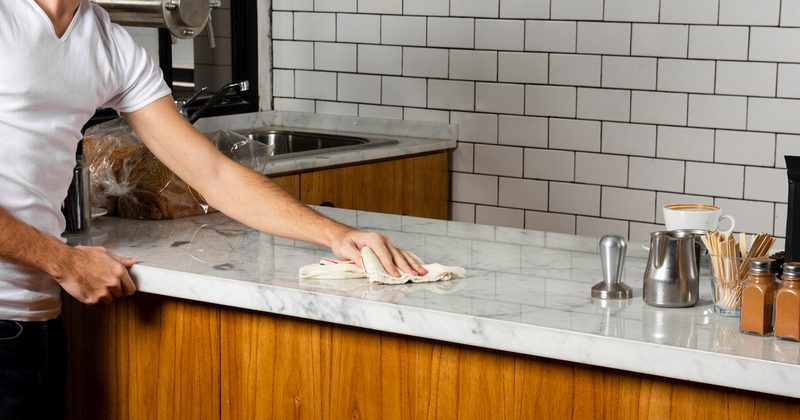
How to clean white quartz countertops
Bright white quartz show spills, smudges, and metal marks more clearly than darker, patterned surfaces. White engineered stone requires specific cleaning protocols to preserve its crisp, bright background.
- Combat gray metal transfer marks: Aluminum pots, cast iron pans, and metal belt buckles can leave dark gray friction streaks on white slabs. These streaks are metal deposits rather than scratches. Remove them by wiping the streak with 5 ml of rubbing alcohol on a soft rag or applying a pea-sized dab of non-abrasive stone polish. Place felt pads under the feet of all heavy countertop appliances. Pick up your appliances to move them. Never drag them across the stone.
- Prevent yellowing: Prolonged exposure to direct UV rays or direct heat from toaster ovens can cause polymer resins in white stone to yellow over time. Keep countertop appliances on heat-resistant silicone pads with 5 cm of air clearance.
- Rust stains from wet tin cans also plague white surfaces. Treat rust spots by making a thick paste out of baking soda and water. Apply the paste over the rust ring. Cover it with plastic wrap and let it sit for 24 hours. Wipe the dried paste away with a wet cloth.
- Target food pigments quickly: Spices such as turmeric, paprika, saffron, and curry powders cause immediate surface stains on light slabs. Wipe these spices instantly with soapy water. If yellow staining occurs, treat the spot within 1 hr using a 70% isopropyl alcohol wipe.
- Avoid bleach brightening: Never attempt to treat white quartz countertops with liquid chlorine bleach. Sodium hypochlorite oxidizes the resin, resulting in irreversible yellow or brown chemical burns.
What not to use on quartz countertops
Engineered stone features high chemical resistance, yet certain substances compromise the structural integrity of the resin. Avoid the following cleaners and tools to prevent permanent surface haze, etching, and pitting:
- High-acid cleaners: Do not use white vinegar, lemon juice, citric acid cleaners, or scale removers. Acid breaks down the resin binders and etches surrounding minerals.
- High-alkaline strippers: Avoid ammonia, oven cleaners, drain openers, and floor strippers with a pH above 10. Strong alkalis break the bond between crushed quartz and polyester resins.
- Abrasive scouring powders: Cleansers with quartz silica or feldspar scratch the smooth factory gloss, leaving dull, rough patches.
- Steel wool and scouring pads: Heavy-duty metal scouring sponges leave micro-abrasions that trap dirt and permanently reduce surface gloss.
- Acetone and paint thinners: Pure acetone softens polymer resins upon extended contact, leading to permanent chemical clouding.
- Chlorine bleach: Undiluted or prolonged bleach contact dissolves resin pigments and creates permanent blotches on polished finishes.


