

Choosing the right surface for a kitchen or bathroom remodel is a major decision. Homeowners frequently compare quartzite vs quartz countertops because their names sound almost identical.
While both options deliver beauty and longevity, they are completely different materials with distinct manufacturing processes, physical characteristics, and care requirements. Understanding these distinctions helps you select the surface that matches your lifestyle, cooking habits, and budget.
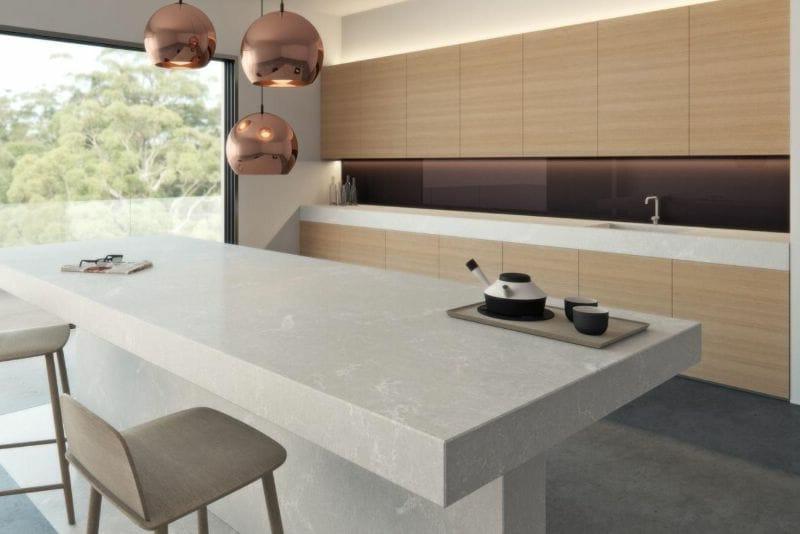
What is quartz?
Quartz countertops are engineered stone surfaces manufactured from a blend of natural minerals and synthetic binders. The typical slab contains roughly 90% to 93% crushed natural quartz crystals mixed with 7% to 10% polymer resins, polymers, and color pigments.
The manufacturing process combines intense pressure, vibration, and vacuum curing to create dense, non-porous slabs. Because it is an engineered product, manufacturers can produce consistent patterns, solid colors, and styles that mimic marble or granite without the natural flaws of raw stone.
Engineered quartz has become 1 of the most popular surface materials for residential and commercial spaces. Its uniform structure means that the sample you select in a showroom matches the slab installed in your kitchen.
What is quartzite?
Homeowners often ask: what is "quartzite countertops"? The answer begins deep within the crust of the earth. Quartzite is a 100% natural metamorphic rock that starts its life as quartz-rich sandstone.
Over millions of 1 yrs, geological pressure and intense heat fuse the sand grains together into a solid crystalline rock. Tectonic activity extracts this stone from large quarries in massive blocks, which fabricators cut into slabs and polish for interior surfaces.
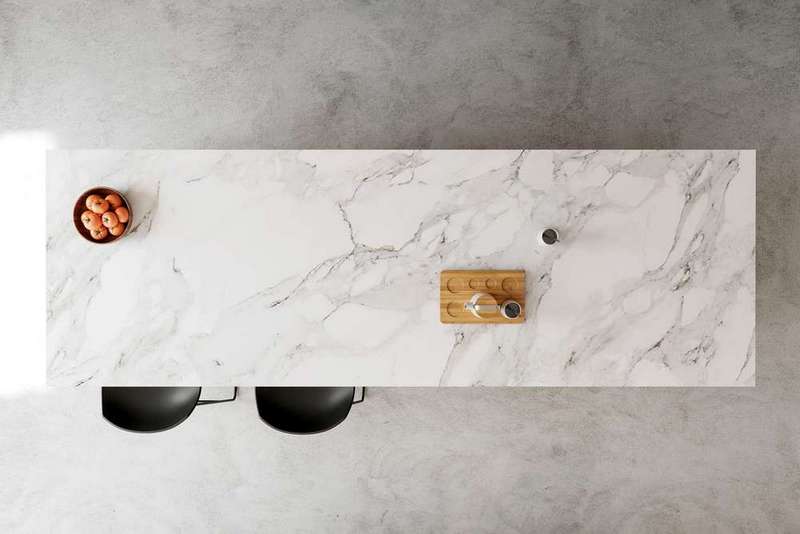
Each slab of quartzite is unique. The stone exhibits dramatic natural veining, swirls, and color variations caused by mineral deposits like iron oxide, copper, and clay during formation. Most natural quartzite comes in shades of white and gray, though exotic varieties display hues of green, blue, pink, and gold.
Core differences between quartz and quartzite
Understanding what's the difference between quartz and quartzite comes down to origin, internal structure, and manufacturing.
Here is how the 2 materials differ at their core:
- Origin: Quartz is factory-engineered using crushed aggregate and resin. Quartzite is an organic rock quarried directly from the earth.
- Porosity: Quartz is entirely non-porous due to its polymer resin composition. Quartzite is a porous natural stone with microscopic capillaries that absorb liquids if not properly sealed.
- Heat resistance: Quartz resin begins to melt and discolor at temperatures above 300°F. Quartzite forms under extreme geological heat and tolerates direct contact with hot cookware up to 1000°F.
- UV stability: Quartz resins break down and yellow when exposed to direct sunlight over 6 to 12 months. Quartzite remains colorfast under outdoor UV rays indefinitely.
- Surface hardness: Quartz measures around 7 on the Mohs mineral hardness scale. Natural quartzite measures between 7 and 8 on the Mohs scale, making it harder than both quartz and granite.
Quartz vs. Quartzite countertops: head-to-head comparison
When evaluating quartz vs quartzite countertops for a remodel, comparing them across practical performance categories helps clarify which material fits your routine.
Porosity and stain resistance
Engineered quartz offers absolute stain resistance. Wine, coffee, tomato sauce, and cooking oils cannot penetrate its resin-sealed surface. You can leave spills on quartz overnight without staining.
Quartzite contains tiny pores between its crystalline structures. Light-colored quartzite can absorb oils and dark liquids, resulting in permanent dark spots if the stone is unsealed. Applying an impregnating stone sealer every 1 to 2 yrs keeps quartzite protected against stains.
Scratch and chip resistance
Both surfaces offer exceptional scratch resistance. Standard kitchen knives will not scratch engineered quartz or quartzite under normal prep work.
Because quartzite rates higher on the Mohs scale, it resists micro-abrasions slightly better than engineered slabs. However, natural stone edges can chip if struck hard with cast-iron cookware. Quartz features slight flexibility from its resin base, giving its edges minor impact resistance compared to brittle stone.
Heat tolerance
Quartz requires caution during cooking. Placing a hot pot directly from a 400°F oven onto an engineered quartz slab can cause thermal shock, white scorch marks, or resin combustion. Always use trivets or hot pads with quartz.
Quartzite handles kitchen heat with ease. You can place hot baking pans directly onto a quartzite countertop without damaging the stone.
Outdoor usability
If you are planning an outdoor kitchen or barbecue island, quartzite is the clear winner. Natural quartzite handles rain, freezing winter temperatures, and blazing summer sun without degrading.
Engineered quartz cannot be installed outdoors. Sunlight breaks down polymer resins, causing dark colors to fade and white slabs to turn yellow.
Maintenance requirements
The fundamental difference between quartz and quartzite dictates how each slab responds to cleaning products. Quartz is virtually maintenance-free. Clean the surface daily with warm water, mild dish soap, and a microfiber cloth. It never requires sealing, polishing, or conditioning.
Quartzite requires active care. Along with regular wiping, homeowners must apply a penetrating sealer annually. Also avoid acidic cleaners containing lemon, vinegar, or bleach, as harsh chemicals strip the protective sealant.
Fabrication and installation complexity
Engineered quartz is predictable to cut, fabricate, and install. It behaves consistently under bridge saws and CNC routers.
Quartzite is so dense and hard that it requires specialized diamond blades and slow cutting speeds. This increases labor time and fabrication cost significantly.
Pros and cons of quartz countertops
Weighing the strengths and limitations of engineered quartz helps determine if it suits your kitchen expectations.
Pros:
- Non-porous surface that never requires chemical sealers
- Highly resistant to bacteria, mold, and mildew growth
- Available in hundreds of uniform colors and marble-like patterns
- Exceptional resistance to food and beverage stains
- Consistent pattern distribution simplifies seam matching during installation
- Resists edge chipping better than natural stone due to flexible resins.
Cons:
- Vulnerable to heat damage and thermal shock above 300°F
- Cannot be used for outdoor kitchens due to UV sensitivity
- Synthetic appearance can lack the natural depth of genuine stone
- Visible seams on large island installations
When analyzing quartz versus quartzite, quartz provides an unbeatable option for busy households seeking zero routine maintenance.
Pros and cons of quartzite countertops
Natural quartzite brings authentic geological beauty into residential spaces, but it demands specific care habits.
Pros:
- 100% natural, 1 of a kind organic patterns and veining
- Outstanding hardness rating of 7 to 8 on the Mohs scale
- Superior heat resistance that withstands hot cookware
- UV resistant and suitable for both indoor and outdoor kitchens
- Adds high appraisal value and luxury appeal to homes
Cons:
- Porous structure requires sealing every 12 to 24 months
- Higher material price and fabrication expense
- Can etch or stain if acidic spills sit on unsealed sections
- Dense hardness increases the risk of chipping along sharp edges
Quartz or quartzite: which is better?
Deciding what is better quartz or quartzite depends on your lifestyle priorities and design preferences.
Choose engineered quartz if:
- You want a zero-maintenance surface that never needs sealing.
- You prefer uniform color palettes and predictable slab patterns.
- You have young children and want complete protection against juice, ink, and sauce stains.
- You want lower installation expenses and simplified fabrication.
Choose natural quartzite if:
- You desire genuine natural stone with authentic veining and crystalline depth.
- You frequently place hot pots and pans on the counter without trivets.
- You are building an outdoor kitchen or patio entertainment space.
- You want maximum surface hardness and higher home resale appeal.
When you select quartzite or quartz, you invest in a premium, long-lasting surface that elevates the function and value of your home.


